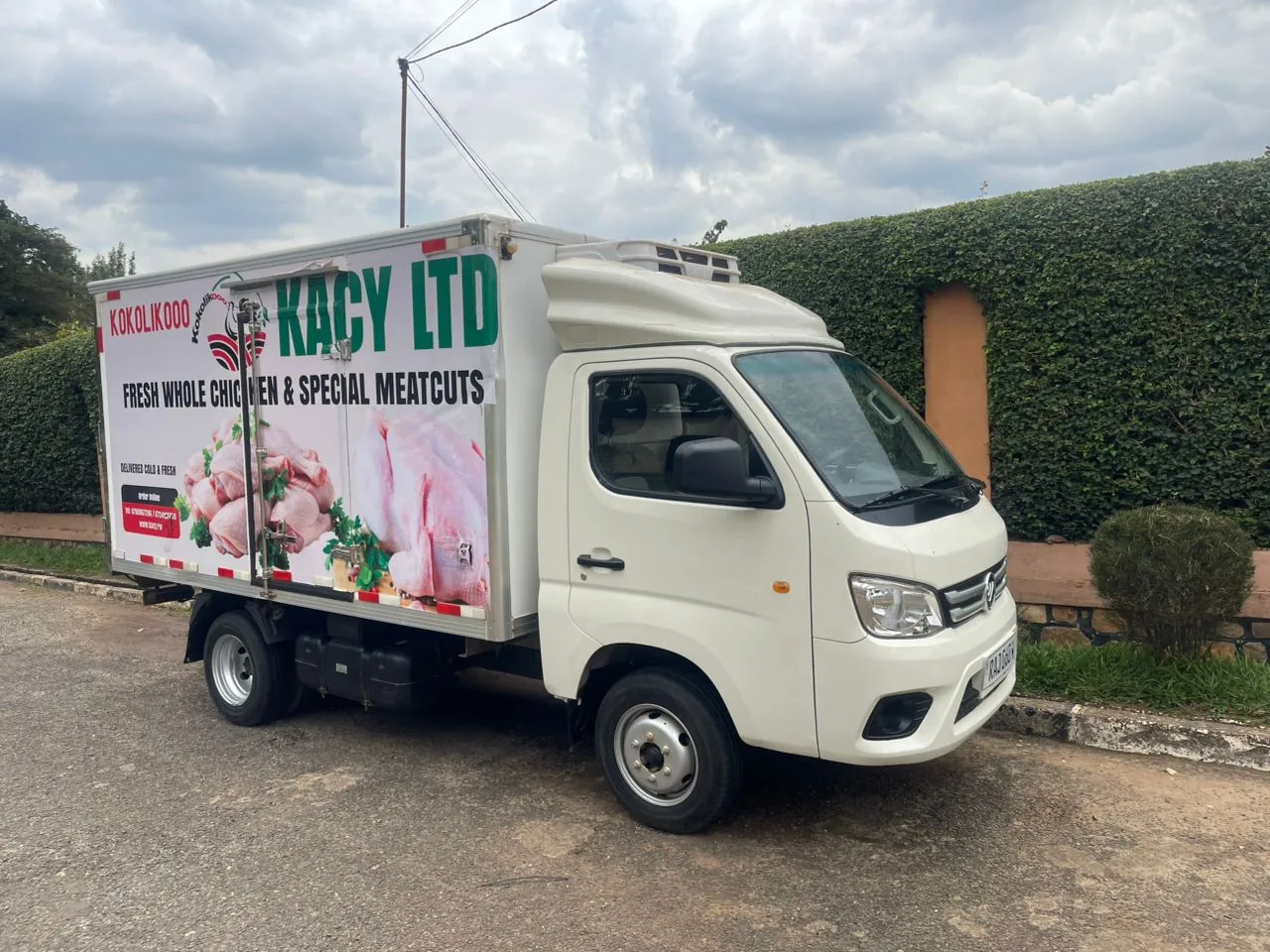
Keep the cold chain unbroken
We chill to 0–4°C and we deliver in refrigerated vehicles. Your half of the job is the fridge at home. Get these temperatures and times right and chicken is one of the least troublesome foods you will cook.
0–4°C
Fridge temperature
74°C
Safe internal temp
1–2 days
Best chilled window
3–4 months
Frozen, well wrapped
Two numbers that matter
Store it at or below
4°C
Between 5°C and 60°C, bacteria multiply quickly. Between 0°C and 4°C they hardly move at all.
Cook it to at least
74°C
Every part of the bird, every time. Check the thickest part of the breast and the innermost thigh close to the bone with a probe.
Those two numbers are the entire food safety argument for chicken. The steps between them — buying, unpacking, thawing, cleaning up — exist to protect the first one and verify the second. Cooking methods and times are covered separately in how to cook chicken meat.
How long it actually keeps
These assume a fridge that is genuinely at 0 to 4°C. Most domestic fridges run a little warmer on the door shelves, which is exactly why we say put chicken low and towards the back.
| State | Where | How long | Notes |
|---|---|---|---|
| Just delivered, chilled | 0–4°C fridge | 1–2 days | Best window. This is when the meat is at its most tender. |
| Chilled, holding | 0–4°C fridge | Up to 3–4 days | Fine if the seal is intact and your fridge is genuinely cold. Use your nose as a backstop. |
| Giblets, chilled | 0–4°C fridge | 1–2 days | Liver goes off faster than muscle. Use it or freeze it. |
| Vacuum-packed, unopened | 0–4°C fridge | By the pack date | Check the printed date. Once opened, treat it as loose fresh chicken. |
| Frozen | -18°C or colder | 3–4 months | Seal or overwrap to stop freezer burn. Label with the date. |
| Partly thawed, refrozen | -18°C | Only if still icy | If it thawed fully in a warm fridge, cook it instead. Do not put it back. |
Four ways, one answer
Thawing on the counter is the one to avoid. The outside enters the danger zone long before the centre is thawed, so you get a warm shell around a frozen core.
In the fridge
12–24 h for a whole bird, 6–8 h for portions
Slowest and safest. Still ice crystals in the centre mean it is fine to cook.
In cold water
About 30 min per 500 g
Sealed watertight bag, submerged in cold tap water, water changed every 30 minutes. Never warm water.
In the microwave
10–20 min per 500 g
Fastest, but it cooks the outside. Cook immediately, straight from the microwave.
From frozen, in the pan
Add 50% extra time
Works well for fillets and strips, less well for a whole bird.
Safe handling, start to finish
-
1
Check the temperature on arrival
Open the box straight away. The meat should be cold to the touch with ice crystals or a chilled pack still present. If it arrives warm, phone us before you cook it and do not eat it.
-
2
Put it in the fridge immediately
0 to 4 degrees Celsius, on a lower shelf, in the packaging it came in or a sealed container. Not the door, and not the counter.
-
3
Use it within one to two days
That is the window where the meat is at its most tender. If you cannot cook it in that time, freeze it rather than pushing your luck.
-
4
Freeze at -18 degrees or colder
Overwrap vacuum packs, label with the date, and keep them flat in the freezer. Three to four months is realistic, a few weeks is not.
-
5
Thaw in the fridge, not on the counter
A whole bird takes 12 to 24 hours, portions 6 to 8. Cold water is the fast alternative. The counter is not an option.
-
6
Cook to 74 degrees and clean up
Check with a probe in the thickest part. Then wash boards, hands and surfaces with hot soapy water before anything touches a ready-to-eat plate.
Signs it has gone off
- Sour, sharp or ammoniac smell when opened
- Slimy or sticky surface instead of firm, springy meat
- Greyer or greenish cast, or bulging vacuum pack
- Cloudy or pink liquid pooling in the tray
If any of those are present, do not taste-test it. Cooking kills bacteria but does not reliably remove the compounds spoilage produces, and the risk is not worth the kilo.
Cross-contamination
Use a dedicated board for raw chicken, keep it away from cooked and ready-to-eat food, and wash boards, knives, surfaces and hands with hot soapy water immediately after. Raw chicken juices are the main route, and they travel a long way on a wet worktop.
The first ten minutes
Open the box straight away
Do not leave delivery boxes sitting on a table while you sort other shopping. Get the meat into the fridge within minutes.
Feel the temperature
It should be cold to the touch, with ice crystals or a chilled pack still in the box. Warm to the touch means something failed.
Check the packs
Look for intact seals, no swelling, no leaks and no discoloration. Photograph anything wrong before you put it in the fridge.
If something is not right, call +250 788 309 077 with your order details. We would much rather replace a delivery than argue about it. If you are ordering regularly, see wholesale supply for standing orders and cold room capacity.
Answered
How long does fresh chicken keep in the fridge?
How do I know if my chicken has gone off?
Can I freeze chicken that has arrived chilled?
Should I wash chicken before cooking?
How long can vacuum-packed chicken stay sealed?
Is it safe to refreeze chicken that thawed?
What if the chicken arrives warm?
Can I give chicken to my dog or cat?
More on chicken meat
Chicken meat products
The full range we sell, from whole broilers to vacuum-packed portions.
Read more →Chicken cuts & butchery
Every cut explained, with average weights, yields and what each one is best used for.
Read more →Chicken meat processing
What happens between the farm and your delivery, and how to spec cuts that fit your kitchen.
Read more →Chicken meat delivery
Coverage, order cut-offs, refrigerated fleet and how to set up a standing weekly drop.
Read more →What you need to know
Grades, weights, yield, what fresh actually looks like, and how to order with confidence.
Read more →How to prepare chicken meat
Safe prep, internal temperatures by cut, and cooking times that match the clock.
Read more →Chicken nutrition facts
Protein, calories and fat per cut, and how to buy for a high-protein kitchen.
Read more →Wholesale chicken supply
Standing orders, minimums, delivery schedules and cold room capacity for Kigali businesses.
Read more →Fresh, cold, and on time
Every order leaves our Rusororo facility at 0–4°C in a refrigerated vehicle, and arrives across Kigali within 24 hours. Check the temperature on arrival, then follow the guide above.
+250 788 309 077
Poultry supply
+250 788 867 296
Wholesale orders
Email us
Rusororo
Gasabo, Kigali