Logistics • August 21, 2026
Why the Cold Chain Matters for Fresh Chicken
"Fresh" is a promise. The cold chain is what keeps that promise true from the moment a bird leaves the processing line until it reaches your receiving dock. Here's why temperature control at every link matters.
What Exactly Is the Cold Chain?
It is the uninterrupted series of refrigerated production, storage, and distribution activities that keep chicken between 0°C and 4°C. One gap — a truck that idles too long in the sun, a loading dock left open, a cooler that drifts above 4°C — is enough to start the multiplication of harmful bacteria like Salmonella and Campylobacter. For ready-to-cook chicken, that's the difference between a safe product and a recall.
Shelf Life Shrinks Fast Above 4°C
Bacterial growth roughly doubles for every 5°C rise in temperature. Keep chicken at 0–4°C and you hold its prime quality for several days. Let it creep to 8°C for a couple of hours and that window collapses — texture softens, odor develops, and safety margins disappear. That's why we measure temperature on pickup, on transport, and on delivery.
Why "Fresh to Door" Beats "Frozen in Transit"
Freezing is safe, but it changes structure: ice crystals rupture cells, so thawed chicken loses moisture and firmness. Fresh, continuously chilled chicken delivered within 24 hours arrives ready to cook at peak quality. That is exactly what our 24-hour farm-to-door delivery across Kigali is built to guarantee.
What a Supplier Should Guarantee
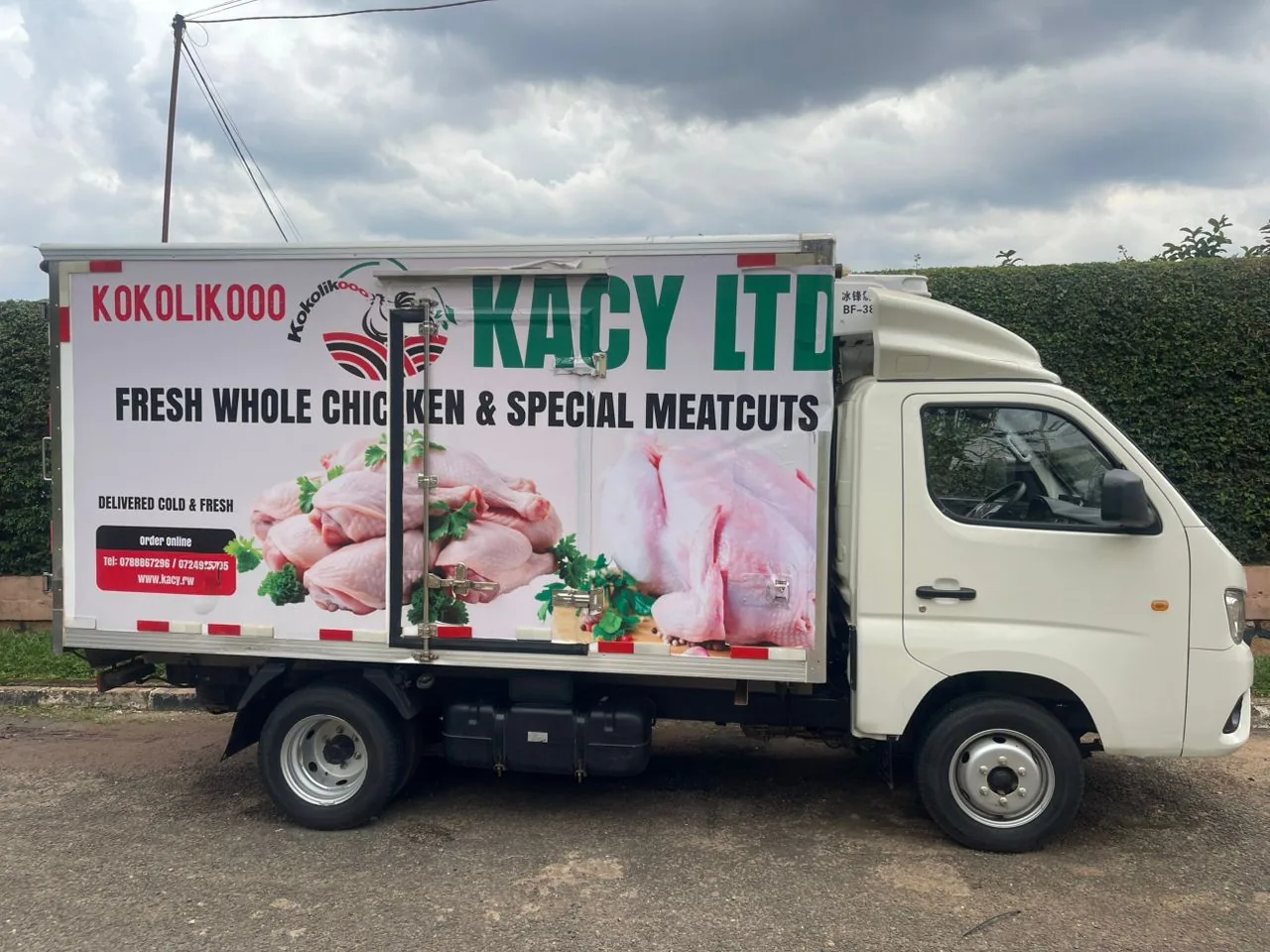
Real cold-chain discipline shows up in details: refrigerated trucks with calibrated thermometers, documented delivery temperatures, and a process that doesn't pause at ambient docks. If a supplier can't tell you the temperature inside their vehicle en route, ask why — and keep looking. At KOKOLIKOOO every load travels in a refrigerated vehicle and arrives chilled, ready to use.
Running a kitchen that depends on timing?
We deliver fresh chicken across Kigali within 24 hours on a schedule you set. Plan your next delivery.